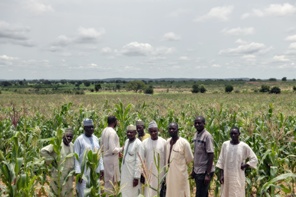
Adoption of regenerative agricultural practices among maize farmers in Katsina State, Nigeria
Abstract
The study examined adoption of regenerative agricultural practices among maize farmers in Funtua Local Government Area of Katsina State, Nigeria. Data were collected from 130 farmers through structured questionnaires and analyzed using descriptive statistics and logit regression model. Results showed that maize farming in the area is largely practiced by middle-aged male farmers, most of whom manage small farms and rely on family labour. Farmers mainly learn about regenerative practices through friends, family members, farmer groups, and maize associations, highlighting the influence of informal networks. Adoption levels were highest for practices such as minimum tillage, organic manure application, crop rotation, and cover cropping methods that are affordable and easy to incorporate. Practices like agroforestry, irrigation, and mulching were adopted by far fewer farmers. It was found that farm size, household size, income, and age significantly influenced whether farmers adopted RAPs, showing that socioeconomic conditions shape adoption decisions. Farmers still face major challenges, including weak extension services, limited access to improved seeds, high input costs, and inadequate credit support. It can concluded that while many farmers are embracing key RAPs, improving access to quality information, reliable extension support, and affordable inputs is essential for wider and effective adoption of RAPs.
Keywords: Adoption, Farmers, Farming Systems, Katsina, Maize and Regenerative Agricultural Practices
INTRODUCTION
Maize (Zea mays) is one of the most widely cultivated cereal crops globally, serving as a staple food, feed, and raw material for various industrial applications. Its versatility and adaptability make it crucial for food security, economic development, and agricultural sustainability. According to the Food and Agriculture Organization (FAO), maize is the third most important cereal crop after rice and wheat, with significant production in the Americas, Africa, and Asia. The United States is the largest producer, followed by China, Brazil, and Argentina (FAO, 2022).
Africa is one of the largest producers of maize globally, with countries like South Africa, Nigeria, and Zambia leading in production. The continent’s favorable climate and varied agro-ecological zones allow for extensive maize cultivation. Maize serves not only as a staple food but also as a source of income for farmers, contributing to rural development and poverty alleviation. However, production is challenged by factors such as pests, diseases, inadequate infrastructure, and climate change, which threaten yield stability and food security (FAO, 2021). Nigeria ranks as the largest producer of maize in Africa, with an estimated production of about 11 million metric tons annually (NBS, 2022). The crop plays a vital role in the country’s agricultural sector, providing food, feed, and industrial raw materials. Nigerian farmers cultivate maize in diverse agro-ecological zones, employing various farming practices. Despite its significance, maize production in Nigeria faces challenges such as poor access to quality seeds, inadequate extension services, and fluctuating market prices, which can impact farmers’ income and food security (Olawale et al., 2020).
In Funtua Local Government Area (LGA) of Katsina State, maize farming plays a central role in the region’s economy. However, like much of Sub-Saharan Africa, Nigerian agriculture faces significant challenges, including soil degradation, poor water management, and low productivity (FAO, 2020). These challenges are exacerbated by climate change, which has led to erratic rainfall patterns, rising temperatures, and more frequent droughts, all of which adversely affect crop yields (UNEP, 2020).
Conventional farming practices, such as intensive tillage, mono-cropping, and the over-reliance on chemical fertilizers and pesticides, have contributed to the depletion of soil fertility, erosion, and the decline of biodiversity in many parts of Nigeria (Abdulkadir et al., 2025; Afolayan et al., 2023). The use of synthetic inputs, while providing short-term gains in crop yields, often leads to long-term environmental harm, such as soil erosion and contamination of water resources (Pretty et al., 2021; Mamman et al., 2025). Such practices do not align well with the realities of climate change, where farming systems must become more resilient to environmental shocks.
Regenerative agriculture offers a potential solution to these challenges. It focuses on practices that restore and maintain healthy soil, enhance biodiversity, and improve water retention, thus promoting long-term sustainability. Regenerative practices include techniques such as no-till farming, cover cropping, crop rotation, agro-forestry, mulching, and organic soil amendments. These approaches aim to mimic natural ecological processes to increase resilience and reduce the need for external inputs (Sachs et al., 2021). The concept of regenerative agriculture is gaining traction globally, particularly in developing countries, where it offers a way to balance the need for increased food production with environmental stewardship (FAO, 2020). In Nigeria, regenerative practices have been identified as a promising pathway for improving food security, increasing agricultural productivity, and promoting climate resilience. However, the adoption of regenerative agricultural practices among smallholder farmers in rural areas like Funtua is still limited. This is largely due to factors such as a lack of awareness, inadequate access to training and extension services, limited financial resources, and a strong attachment to traditional farming methods (Fawole et al., 2025; Doud and Peterson, 2020).
The Nigerian government has initiated several policies aimed at promoting sustainable agricultural practices, including the National Agricultural Resilience Framework (NARF) and the Agro-Environmental and Biodiversity Conservation Program. However, the effectiveness of these initiatives has been mixed, particularly in remote regions like Funtua, where farmers face infrastructural and knowledge barriers. The National Agricultural Extension and Research Liaison Services (NAERLS) and state-level extension services have attempted to disseminate knowledge about sustainable and regenerative practices, but the challenge of reaching all farmers remains significant.
Despite the government’s efforts, there is a need for more targeted programs and community-based initiatives that focus on building the capacity of smallholder farmers in adopting regenerative practices. Moreover, given the importance of maize to food security and economic stability in Funtua, understanding the barriers and enablers of adopting regenerative agricultural practices is crucial to developing strategies that can enhance the resilience and sustainability of maize farming in the region.
This study, therefore, seeks to explore the adoption of regenerative agricultural practices among maize farmers in Funtua LGA, Katsina State, and to identify the factors that influence their decision to adopt or reject these practices. It aims to provide insights into the potential for regenerative agriculture to enhance the productivity and sustainability of maize farming in the face of environmental challenges.
METHODOLOGY
The Study Area
The study was conducted in Funtua Local Government Area (LGA) of Katsina State, Nigeria. Funtua LGA is located in the southeastern part of Katsina State, Nigeria. Katsina State, situated in the northwest region of Nigeria, is known for its significant agricultural activities, particularly in the production of crops like maize, millet, sorghum, and cotton. Funtua LGA, one of the administrative divisions within the state, serves as an important agricultural hub, with a predominantly rural population engaged in farming as the primary livelihood activity. Funtua LGA is located at approximately 11.69° N latitude and 7.23° E longitude, with population of 225,571 at the 2006 census and 570,110 according to 2016 estimate. It is bordered by several other LGAs within Katsina State, to the north, it shares boundaries with Mashi LGA; to the east, it is adjacent to Dandume LGA; to the south, it borders Zango LGA, and to the west, it is bordered by Sokoto State. The area is characterized by dry savannah vegetation, with a mix of grasslands and scattered trees. The landscape is predominantly flat, and the soil type varies, with areas of sandy loam and clay found throughout the region.
The region experiences a semi-arid climate, with distinct wet and dry seasons. The rainy season typically lasts from May to October, while the dry season extends from November to April. During the rainy season, the area receives moderate rainfall, typically ranging from 500 mm to 1,000 mm per year, which is sufficient for farming but can be unpredictable and subject to irregularities due to climate change impacts. Funtua has a predominantly rural population, with the majority of the population relying on subsistence farming for their livelihoods. According to the National Population Commission (NPC), Funtua LGA has a growing population, with both young and adult farmers engaged in agricultural activities. Farming is largely done by smallholder farmers, many of whom own less than 2 hectares of land. The local population is diverse, with different ethnic groups, including Hausa, Fulani, and Katsina, among others, living in the area. These communities have a rich cultural heritage and have developed traditional farming knowledge passed down through generations.
Agriculture is the backbone of the economy in Funtua LGA, and maize is one of the key crops grown in the region. Maize farming is done mainly by smallholder farmers, often using traditional farming methods, although there are some farmers who have started experimenting with modern agricultural practices. In addition to maize, other important crops grown include millet, sorghum, groundnuts, soybeans, and cotton. Livestock farming is also common, with cattle, goats, sheep, and poultry being raised by many farmers.
Farmers in Funtua primarily practice rain-fed agriculture, which makes them vulnerable to the unpredictable and erratic nature of the rainfall patterns. The region’s dry season is marked by extreme temperatures and droughts, making it difficult to rely solely on conventional farming methods for year-round food production. This makes Funtua LGA particularly sensitive to the impacts of climate change and soil degradation, which further exacerbate the challenges faced by local farmers.
The climate in Funtua LGA is categorized as semi-arid, with a high degree of seasonal variation in temperature and rainfall. The region experiences high temperatures during the dry season, with temperatures sometimes exceeding 40°C. Rainfall during the wet season is generally moderate but can be unpredictable, which makes rain-fed agriculture particularly vulnerable to drought and flooding. These climatic conditions further highlight the importance of introducing farming practices that improve water conservation, soil fertility, and climate resilience, all of which are key components of regenerative agriculture.
Populations of the study
The population for this study consists of all the maize farmers in Funtua local government area of Katsina State.
Sampling Procedures and Sampling Size
A two-stage sampling technique was used to select the respondents for this study.
In the first stage, a purposive sampling procedure was used to select five (5) communities with high concentration of maize farmers from the study area (Table 1). In the second stage, a list of the registered maize farmers was obtained from Department of Agriculture, Funtua LGA to determine the sampling frame from each community while Taro Yamane’s (1973) formula was used in computing the required sample size for the study. The formula is stated as follows:
n=N/1+N (e) 2 (1)
Where n = required sample size, N = number of maize farmers obtained from the list of registered maize farmer in each community; and e = permissible error (0.05). Substituting the values of N and e into Equation 1, we have:
n = 2900/1+2900 (0.05)2
n = 227/7.2525 = 400
Respondents from each community will therefore be selected randomly and proportionately using the expression below;
x= (X/n)*N (2)
Where;
x = Sample size per community
X = Number of registered maize farmers per community
n = Total number of registered maize farmers in the six communities
N = required sample size for the study (from Taro Yamane’s 1973 formula)
The selected communities and number of sampled maize farmers from each community is presented in Table 1.
Instrument for data collection
Primary and secondary sources of data was used for this study. The primary data was collected through structured questionnaires, while the secondary data was generated from related articles in journals and other relevant literatures.
Measurement of Variables
Independent Variables
Age: Age was measured as number of years of the maize farmers. This was the total number of years of the maize farmers.
Gender: This was measured by ranking all the male respondents 1 and female respondents 2 and then counting the total number of the two groups.
Marital Status: This was measured by ranking the singles 1, married 2, divorced 3, widow 4 and widower 5.
Household size: This measurement was carried out by counting the number of wives, children, dependents and relatives living in the respondent’s house at the time of the investigation.
Educational Level: This was measured in terms of the highest educational qualification attainment of the respondent. The listed educational attainments were: no formal education 1, Arabic education 2, primary education 3, Secondary education 4, and tertiary education 5.
Farming Experience: The respondents were asked to indicate the actual number of years they have been into maize farming.
Monthly income: The respondents were asked their income in naira.
Membership of Cooperative: This was measured as Yes=1, No=0, if otherwise.
Access to credit: The respondents were asked if they have access to credit with Yes=1, No=0
Extension agent contact: Respondent were asked if they have contact with extension agents with Yes=1, No=0.
Sources of information: The respondents were asked to indicate their sources of information on improved maize farming production technologies.
Constraints facing adoption of regenerative agricultural practices among maize farmers: The respondents were asked to indicate the constraints to adoption of regenerative agricultural practices using a 5-point likert-type scale of very severe = 5, Severe = 4, mildly severe = 3, Not severe = 2 and Not a problem at all = 1.
Dependent Variable
The dependent variable of the study is adoption of regenerative agricultural practices by the maize farmers.
Level of Adoption of regenerative agricultural practices: The respondents were asked to indicate their level of adoption on regenerative agricultural practices using a 6-point liker scale of Not aware = 1, Aware = 2, Interest = 3, Evaluation = 4, Trial = 5, Adoption = 6. In a six point Likert type scale that was used to measure the respondents’ level of adoption of RAPs, a list of RAPs (Use of crop rotation, Cover cropping, water management and conservation, agroforestry, reduce tillage/No tillage, composting and organic fertilizer, holistic rising and pasture management, integrated pest management, Soil health monitoring, carbon sequestration, diverse seed and plant varieties, Silvopasture, integrated livestock and crop system) were provided for them to tick. The values on the Likert scale was added to obtain 21 and divided by 6 to obtain a Benchmark of 3.5. Any variable with a mean score equal or higher than 3.5 was perceived as high level of adoption of regenerative agricultural practices among maize farmers, while variable with a mean score of less than 3.5 was regarded as low level of adoption of regenerative agricultural practices among maize farmers.
Analytical Techniques: Logit Regression Model
Logit regression model was used to determine the factor influencing adoption of regenerative agricultural practice. This model was appropriate for this study since the dependent variable is the choice of the maize farmer on the assessment of maize farmer used. This is expressed as percentage of the optimum dosage; thus the dependent variable must be between 0 limit and continuous level of Adoption of regenerative agricultural practice. Logit Regression Model is estimated through the Maximum Likelihood Estimation (MLE) procedure. It is specified as:
Yi = β1X1 + β2X2+ β3X3+β4X4+ β5X5+ β6X6+ β7X7+β8X8+ β9X9+ β10X10+ β11X11+e
Where:
X1 = Age (years)
X2 = Sex (1 = male, 0 = female)
X3 = Marital Status (Dummy = 1 if married; 0, if otherwise)
X4 = Household Size (number)
X5 = Educational Level (years)
X6 = Farming Experience (years)
X7 = Farm Size (hectares)
X8 = Monthly Income (Naira)
X9 = Access to Credit (Yes=1, No= 0)
X10 = Extension Agent Contact (Yes=1, No= 0)
X11 = Membership of Cooperative (Yes=1, No= 0)
e = error term
RESULTS AND DISCUSSION
Socioeconomic characteristics of maize farmers
The result in table 2 shows that the age distribution is predominantly middle-aged to older farming population, with 26.9% aged 50-54 years and a mean age of 43 years. This aging demographic profile may present both challenges and opportunities for regenerative agricultural practice adoption. Older farmers often possess extensive traditional knowledge of local ecosystems (Akpoti et al., 2022), Moreover, results in table 2 showed that majority (97.7%) of the respondents were males, while (2.3%) were females, reflecting broader trends in agricultural participation across many developing regions, where women’s contributions are frequently underrepresented in formal surveys (Farnworth et al., 2020). Majority (78.5%) of the respondents were married, 20.0% were single, 1.5% were widow. These results implied that majority of respondents were married.
Household size averaged 7 person, with 40.8% of households containing 5-9 individuals. Larger household sizes may provide labour resources for more labour-intensive RAPs, but may also increase subsistence pressure on farm outputs. More so, table 2 shows that 21.5% had no formal education, 10.0% had primary education, 33.8 had secondary education while 34.6% had tertiary education. Educational attainment levels showed promising results for RAPs adoption potential, with 34.6% having tertiary education. Education level has been consistently identified as a positive factor in the adoption of sustainable agricultural practices (Adjognon et al., 2021).
The monthly income distribution reveals that 34.6% of farmers earn less than ₦100,000, with a mean income of ₦123,846. This economic situation may constrain farmers’ ability to invest in RAPs without financial support mechanisms. Farm size data shows that 91.5% of respondents operate on less than 5 hectares, classifying them as smallholder farmers. This is significant because smallholder farmers often face unique challenges in adopting new practices due to limited resources and higher risks (Mango et al., 2020).
More so, access to credit appears limited, with 53.1% of respondents reporting no access to formal credit. This represents a significant barrier to regenerative agricultural practices adoption, as noted by Martey et al. (2022) in their analysis of conservation agriculture adoption barriers. Extension service contact was reported by only 44.6% of respondents, suggesting a need for strengthened agricultural extension systems. However, the relatively high cooperative membership rate (60.8%) presents a potential avenue for disseminating RAPs knowledge, as farmer organizations have been shown to facilitate agricultural innovation diffusion (Awotide et al., 2021).
Sources of information on regenerative agricultural practices
Table 3 shows that higher percentage (99.2%) of the maize farmers got their information on regenerative agricultural practices through friends, (97%) got their information from family members, (70.8%) of them obtained the information through farmer’s group, (70%) of them obtained the information through maize association, (53.8%) through extension agents, (30.8%) of them got the information through radio, (17.7%) from workshop, (16.2%) got their information through seminar and (3.8%) of them obtained their information through newspaper and television respectively. For instance, Umar et al. (2023) noted that informal communication through friends and family was more influential than formal extension services in influencing smallholder farmers’ decisions in northern Nigeria. Similarly, Nnadi et al. (2022) emphasized the role of farmer groups and associations in spreading knowledge on sustainable practices due to shared trust and localized experience.
Although extension agents and media platforms such as radio and television serve as formal sources of agricultural information, their relative influence appears lower. This is consistent with findings by Adekunle and Olanrewaju (2021), who identified weak extension systems and limited access to media in rural areas as key barriers to knowledge transfer in Nigerian agriculture. Furthermore, Afolayan et al. (2023) highlight that the effectiveness of agricultural seminars and workshops depends significantly on accessibility and relevance to farmers’ immediate needs.
Adoption of regenerative agricultural practices
Table 4 shows the result on the adoption of regenerative agricultural practices among maize farmers. It was revealed that majority of the maize farmers adopted use of minimum tillage (98.5%), use of organic manure (88.5 %), crop rotation (87.7%), use of cover cropping (79.2 %), use of water harvesting (74.6 %), use of mixed cropping (73.3%) use of mixed farming and use of drought/heat tolerant varieties (53.1%) respectively, use of strip cropping (47.7%), use of aforestation (23.1%) use of wetland (fadama) (21.5%), use of irrigation (16.9%), use of mulching (13.8%) and the least adopted practices was on use of agroforestry (6.4%).This finding shows that the respondents have adopted use of minimum tillage, use of organic manure, crop rotation, use of cover cropping, use of water harvesting, use of mixed cropping, use of mixed farming and use of drought/heat tolerant varieties in the study area (Fawole et al., 2025; Abdulkadir et al., 2020). Meanwhile, use of strip cropping, afforestation, use of wetland (fadama), use of irrigation, use of mulching and use of agro-forestry are relatively low in terms of its adoption by the respondents. These supports the findings of Olayemi et al. (2021) and Fawole et al., (2025) whom in their works examined the adoption of organic farming practices among maize farmers in Nigeria, providing insights into the current state of organic agriculture in the country which also corresponds to Okonta et al. (2023), whom conducted a study on the level of adoption of organic farming practices among arable crop farmers in Oyo State whose research study aimed to investigate the current state of organic farming practices among farmers in the region and identify the factors influencing the adoption of these practices.
Level of adoption of regenerative agricultural practices by farmers
Table 5 shows that minimum tillage leads with a remarkable 96.9% adoption rate, suggesting near-universal implementation. This aligns with global trends where reduced tillage has gained prominence due to its labour-saving benefits and soil conservation advantages (Fan et al., 2021). Crop rotation follows closely 89.2% adoption, demonstrating farmers’ recognition of its pest management and soil health benefits (Adesoji et al., 2025). Organic manure application shows similarly strong adoption 90%, reflecting continued reliance on traditional fertility management approaches despite modern alternatives.
Several practices demonstrate substantial use but not universal adoption. Mixed cropping adoption (76.9%), and cover cropping adoption (80.8%), show strong uptake, though slightly lower than the top-tier practices. Water harvesting systems adoption (69.2%), indicate significant progress in climate adaptation strategies. These patterns correspond with the innovation diffusion theory (Ndiritu and Kassie, 2022), where practices offering clear benefits but requiring moderate additional management typically achieve intermediate adoption levels.
The data reveals several practices in transitional adoption phases. Mixed farming systems adoption (50.8%), and strip cropping adoption (47.7%), show promising growth, while drought-tolerant varieties adoption (52.3%), indicate responsive adaptation to climate challenges. These emerging practices often represent more complex systems requiring greater knowledge integration, explaining their slower but steady adoption trajectory (Boateng et al., 2021).
Significant adoption barriers appear for several techniques. Irrigation adoption (14.6%), and afforestation adoption (19.2%), show limited uptake, while agro-forestry demonstrates the lowest adoption (3.8%). These patterns highlight the challenges documented in implementing practices requiring long-term investments or significant system redesign (Iiyama et al., 2020). The particularly low agroforestry adoption suggests potential barriers including land tenure issues, knowledge gaps, or inadequate support systems.
Factors influencing the adoption of regenerative agricultural practices
Among the variables, farm size, household size, income, and age were found to be statistically significant predictors at the 5% level (Table 6). Farm size had an odds ratio of 1.32, suggesting that for every unit increase in farm size, the odds of adopting regenerative practices increase by approximately 32%. This finding aligns with the notion that larger farm operations may have more flexibility and resources to experiment with and adopt innovative practices.
Household size also showed a positive influence (odds ratio = 1.22, p = 0.004), indicating that households with more members are more likely to adopt regenerative agriculture. This is likely because larger households can provide the necessary labor required for many of the practices, which are often labor-intensive. Income was a significant predictor as well (odds ratio = 1.000006), albeit the odds ratio is very close to 1 due to the scale of income measurement. This suggests that even a small increase in income increases the probability of adoption, reinforcing the idea that financial capability is essential for investing in new agricultural technologies. Age also had a positive and significant effect (odds ratio = 1.039), indicating that older farmers were slightly more likely to adopt regenerative agricultural practices. This may reflect the accumulated experience and confidence older farmers have in trying new techniques, especially those aligned with traditional ecological knowledge.
On the other hand, education level, access to extension, membership in cooperatives, and marital status were not statistically significant at the conventional 5% level. Although the odds ratio for education (1.41) suggests a positive influence, the p-value of 0.121 implies that this effect was not statistically reliable in this sample. Similarly, access to extension services and cooperative membership showed odds ratios less than 1, suggesting a potential negative or neutral influence, but these results were not statistically significant (p = 0.690 and 0.453 respectively). This is particularly surprising for access to extension, which is generally assumed to enhance adoption; however, the large standard error may indicate variability or inconsistency in the effectiveness of extension services in the area.
The constant term in the model was also not statistically significant (p = 0.074), suggesting that the baseline likelihood of adoption when all predictors are zero is not clearly defined, which is not unusual in models with many socioeconomic predictors.
Constraints faced by the respondents in the adoption RAPs
The result of constraints faced by the respondents in the adoption of RAPs is presented in Table 7. Poor extension services and inadequate access to improved seeds were identified to be the topmost constraints with mean score of 4.39 respectively. Limited access to improved maize varieties ranked third with a mean score of 4.25. Low level of income ranked fourth with the mean score of 4.22. The next constraints in the ranking, is high cost of inputs. This has a mean score of 4.21 and ranked fifth. Untimely delivery of improved seeds ranked sixth with a mean score of 4.16. Limited access to credit was ranked seventh with a mean score of 4.09. Lack of technical knowledge was ranked eighth with the mean score of 4.08, followed by low capacity building on RAP (mean=3.89), low level of educational attainment of farmers (mean=3.86), low level of farmer awareness on RAP (mean=3.80), inadequate information about RAP (mean=35.5), high cost of RAP (mean=3.04), high labour requirement of RAP (mean=2.97), and land tenure issues (mean=2.95), while RAP is too difficult to use was ranked last with the mean score of mean= 2.80. These findings align with Anderson and Feder, (2021) framework of agricultural advisory systems, which highlights how weak extension services create knowledge gaps. Limited access to improved maize varieties and high input cost, and also supports Kanslime et al. (2021), capital constraint model, where financial limitations disproportionately affect adoption of practices requiring upfront investment.
Hypthesis Testing
The results in Table 8 show the significant relationship between some selected socioeconomic characteristics and level of adoption of regenerative agricultural practices through Pearson Product Moment Correlation analysis. The results revealed that age (r =-138, p ≤ 116), level of education (r = 129, p ≤ 013), marital status (r = -084, p ≤ 344), access to credits (r = -051, p ≤ 567), access to extension contact (r =019, p ≤ 829) and membership of cooperative (r = -039, p ≤ 660) had no significant relationship with level of adoption of regenerative agricultural practices, while household size (r =228, p ≤ 009), farm size (r = 216, p ≤ 013), and monthly income ( r =191, p ≤ 029) had significant relationship with the level of adoption. Hence, H01 is rejected for household size, farm size, and monthly income, while that age, level of education, marital status, access to credits, access to extension contact and membership of cooperative are accepted, thus, positive correlation indicates positive relationship between variables, while negative correlation indicates negative relationship between variables. The result obtained implies that increase in any of the significant variables will cause increase level of adoption of RAPs among the maize farmers in the study area, on the other hand, increase or decrease in any of the non-significant variables does not influence the respondents’ level of adoption of RAPs.
CONCLUSION
The findings from this study shows that use of minimum tillage, use of organic manure, crop rotation, use of cover cropping, use of water harvesting, use of mixed cropping, use of mixed farming and use drought/heat tolerant varieties, are the majority RAPs that the maize farmers adopted in the study area. Moreover, the study also discovered that majority of the maize farmers got their information through friends, family members, farmer’s group and maize association. Nevertheless, farm size, household size, income, and age were factors that are statistically significant thus influencing the rate of adoption of RAPs. Finally, poor extension services, inadequate access to improve seeds were identified to be the topmost constraints, limited access to improved maize varieties, low level of income, high cost of inputs, untimely delivery of improved seeds, limited access to credit, lack of technical knowledge and low capacity building on RAP were the major constraint affecting the adoption of RAPs in the study area.
REFERENCES
Abdulkadir Aliyu, Musa Sarah, James Deborah (2025). A review of the role of cover crops in mitigating soil health degradation and other challenges associated with maize monoculture. FUDMA Journal of Agriculture and Agricultural Technology, 11:115-128.
Abdulkadir A., Dawaki M.U., Sani M. (2019). Effect of organic soil amendments on soil chemical properties in Sudan Savannah of Nigeria. Nigerian Journal Science Society, 30: 122–132.
Adebayo S.B., Ajani E.N., Okeowo T.A. (2021). Awareness and adoption of climate-smart agricultural practices among smallholder farmers in Nigeria. Journal of Agricultural Extension, 25: 32–44.
Adekunle, A. A., and Olanrewaju, F. O. (2021). Barriers to agricultural knowledge transfer in rural Nigeria: Weak extension systems and limited media access. Journal of Agricultural Extension, 25: 112-124.
Adenuga A.H., Awotide B.A., Kehinde O.A. (2021). Adoption of climate-smart agricultural practices and its impact on productivity of maize farmers in Nigeria. Scientific African, 12: e00803.
Adesoji A.G., Aliyu A., Musa M., Musa S., James D. (2025). Assessment of soil health status and exploring the potential of its improvement using cover crops in Dutsin-Ma, Katsina State. Sahel Journal of Life Sciences FUDMA, 3: 192–197.
Afolayan A.B., Ajani E.N., Yusuf O.J. (2023). Environmental implications of conventional farming and the need for sustainable practices in Nigeria. Journal of Agricultural and Environmental Research, 11: 45–56.
Afolayan R.A. et al. (2023). Evaluating the effectiveness of agricultural seminars and workshops for smallholder farmers in Nigeria. International Journal of Agricultural Education and Extension, 29: 45-59.
Ajala S.O., Olaleye R.S., Yusuf M.A. (2021). Historical perspectives on maize cultivation in West Africa: Diffusion and adaptation. Journal of Agricultural History and Policy, 14: 45–58.
Ajala S.O., Olaleye R.S., Yusuf M.A. (2022). Evolution and spread of maize in sub-Saharan Africa: Lessons from past and present. African Journal of Agricultural Research, 17: 134–145.
Altieri M.A., Nichols P. (2022). Regenerative agriculture: Principles and practices for ecological balance. Agroecology Press.
Anderson J.R., Feder G. (2008). Agricultural advisory services and knowledge gaps: A framework for extension systems. World Bank.
Aromolaran A.K., Alarima C.I., Akerele D., Soetan O.J., Alao A. O. (2017). Assessment of food security among farming households in agrarian communities of Oluyole area Oyo State, Nigeria. Nigerian Journal of Rural Sociology, 17: 20-27.
Asiabaka C.C., Eze S.O., Nwachukwu I. (2021). Application of Rogers’ diffusion of innovations theory in modern agricultural extension practice. Journal of Agricultural Extension and Rural Development, 13: 67–76.
Awotide B.A., Ogunniyi A., Olagunju K.O., Manda J., Alene A., Nguena C.L., Abdoulaye T. (2021). Does Adoption of Improved Agricultural Technologies Impact Welfare, Poverty and Food Security in the Sahelian Region of West Africa?.
Boateng E., et al. (2021). Adoption dynamics of sustainable agricultural practices: Insights from smallholder farmers. Sustainability, 13: 4215.
Bolaji Emmanuel Fawole, Lateefah Abubakar, Aliyu Abdulkadir (2025). Adoption of organic farming practices among maize farmers in Batagarawa Local Government Area of Katsina State, Nigeria. FUDMA Journal of Agriculture and Agricultural Technology, 11: 75-88.
Bwambale N. (2015). Farmers' knowledge, perceptions, and socioeconomic factors influencing decision making for integrated soil fertility management practices in Masaka and Rakai districts, central Uganda. Master's thesis, Iowa State University.
CIMMYT (2021). Maize in Africa: Building resilience through improved technologies. International Maize and Wheat Improvement Center.
CIMMYT (2021). Maize production in Africa: Challenges and opportunities. International Maize and Wheat Improvement Center.
CIMMYT (2022). Climate resilience in maize production. International Maize and Wheat Improvement Center.
CIMMYT. (2022). Strengthening maize value chains for smallholder farmers in Africa. International Maize and Wheat Improvement Center.
Doud M.A., Peterson H.C. (2020). Barriers to adoption of regenerative farming practices among smallholder farmers. Sustainable Agriculture Research, 9: 113–123.
Duru M., Nwachukwu I. (2020). Economic analysis of regenerative agricultural practices among maize farmers in Southeast Nigeria. International Journal of Agricultural Economics and Extension, 8: 55–63.
Fan X. (2021). Reduced tillage and soil conservation: A global review. Soil Science and Plant Nutrition, 67: 317-329.
FAO (2020). The State of the World’s Biodiversity for Food and Agriculture. Food and Agriculture Organization of the United Nations.
FAO (2021). Africa Regional Overview of Food Security and Nutrition 2021. Food and Agriculture Organization.
FAO (2021). The state of food and agriculture 2021: Making agrifood systems more resilient to shocks and stresses. Food and Agriculture Organization of the United Nations.
FAO (2021). The state of food security and nutrition in the world. Food and Agriculture Organization of the United Nations.
FAO (2022). FAOSTAT Statistical Database. Food and Agriculture Organization of the United Nations.
Farnworth C.R., Badstue L., Williams G.J., Tegbaru A., Gaya H.I. M. (2020). Unequal partners: associations between power, agency and benefits among women and men maize farmers in Nigeria. Gender, Technology and Development, 24: 271-296.
Giller K.E., Hijbeek R., Andersson J.A., Sumberg J. (2021). Regenerative agriculture: an agronomic perspective. Outlook on agriculture, 50: 13-25.
Giller, K. E., Witter, E., Corbeels, M., and Tittonell, P. (2021). Conservation agriculture and the role of crop rotations in sustainable maize production. Agriculture, Ecosystems and Environment, 303: 107156.
Higgins S., Smith R., Brown L. (2021). Cover cropping in maize systems: Benefits for soil fertility and pest management. Sustainable Agriculture Reviews, 38: 45–67.
Igbokwe E.M., Obasi I.C., Ugwoke F.O. (2021). Constraints to effective agricultural extension delivery in Nigeria. African Journal of Agricultural Research, 16: 820–828.
Igbokwe E.M., Obasi I.C., Ugwoke F.O. (2021). Constraints to effective agricultural extension delivery in Nigeria. African Journal of Agricultural Research, 16: 820–828.
Iiyama, M., et al. (2020). Barriers to agroforestry adoption among smallholder farmers in Sub-Saharan Africa. Agroforestry Systems, 94: 435-448.
Jambo Y.A., Goni M., Umar H.Y. (2023). Constraints to adoption of soil and water conservation in Nigeria. Heliyon, 9: e12691.
Kansiime M.K., Njunge R., Okuku I., Baars E., Alokit C., Duah S., Watiti J. (2022). Bringing sustainable agricultural intensification practices and technologies to scale through campaign-based extension approaches: lessons from Africa Soil Health Consortium. International Journal of Agricultural Sustainability, 20: 743-757.
Kassie M., Teklewold H., Jaleta M., Marenya P., Erenstein O. (2020). Understanding the adoption of sustainable intensification practices. Agricultural Systems, 180: 102763.
Kpadonou R.A.B., Adenle A.A., Gbedo P.M. (2022). Regenerative agriculture in sub-Saharan Africa: Challenges and pathways. Environmental Challenges, 7: 100497.
Lal R. (2004). Soil carbon sequestration to mitigate climate change. Geoderma, 123: 1-22.
Mango N., Siziba S., Makate C. (2017). The impact of adoption of conservation agriculture on smallholder farmers’ food security in semi-arid zones of southern Africa. Agriculture & Food Security, 6: 32.
Martey N.M., Tham-Agyekum E.K., Ocansey C.M., Nimoh F., Kwarteng L.K. (2022). Analysis of smallholder maize farmers’perceptions on climate change variability and adoption of adaptive agrarian strategies in the gomoa central district, Ghana. Bangladesh Journal of Agricultural Economics, 43: 31-49.
Mbow C., Smith P., Skole D., Duguma L., Bustamante M. (2021). Agroforestry solutions for resilience to climate change in maize-growing regions. Environmental Research Letters, 16: 064021.
Midega C., Pittchar J., Pickett J.A., Khan Z.R. (2021). Cover crops as a pest management strategy in maize production. Crop Protection, 141: 105406.
Muhammad U.K., Saba M., Nazifi B., Al-Solaimani S.G. (2024). Soil fertility management practices among smallholder cereals producing farmers in Dutsin-Ma Local Government Area of Katsina State, Nigeria. International Journal of Botanical Horticultural Research, 2: 13-20.
Muntaka Mamman, Aderemi G. Adesoji, Hussaini Yusuf Ibrahim, Abdulhadi Muhammad, Musa Muhammad, Ahmed A. Abdullahi, Aliyu Abdulkadir, Hussaina Babba Usman, O. M. Olarewaju (2025). Comparative analysis of yield and profitability of maize (Zea mays L.) Production using precision agriculture in the semi-arid region of Nigeria. FUDMA Journal of Agriculture and Agricultural Technology, 11: 54-58.
NBS (2022). National Agricultural Sample Survey Report 2021/2022. National Bureau of Statistics, Abuja, Nigeria.
Ndiritu S.W., Kassie M. (2022). Diffusion of agricultural innovations: Theory and practice in Sub-Saharan Africa. Journal of Agricultural Economics, 73: 1-15.
Nganga L., Ndiritu S., Bett C. (2022). Adoption of regenerative agriculture practices in Kenya. Journal of Agricultural Economics and Development, 11: 45-56.
Ngwira A.R., Mutenje M.J., Nyagumbo I. (2021). Impact of no-till farming on soil health and maize yield in smallholder farms. Soil and Tillage Research, 205: 104753.
Nnadi F.N., et al. (2022). The role of farmer groups and associations in knowledge dissemination of sustainable agricultural practices in Nigeria. Sustainable Agriculture Research, 11: 78-90.
Ogheneruemu O.E., Oladapo O.T. (2021). Do climate-smart agricultural practices drive food security of maize farming households in Ogun state, Nigeria?. Ghana Journal of Science, Technology and Development, 7: 135-151.
Ogunbameru B. . (2001). Modernizing agriculture in Nigeria: Extension education perspective. Zaria: Ahmadu Bello University Press.
Okonta O.W., Ajala A.O., Kolawole E.A., Ogunjimi S.I., Adejumo A.A. (2023). Willingness to adopt organic farming practices among arable crop farmers in Oyo State, Nigeria. Journal of Agricultural Extension, 27: 41-52.
Olawale O.G., Ibrahim S.A., Bello T.M. (2020). Constraints to maize production in Nigeria: A review. Nigerian Journal of Agriculture, Food and Environment, 16: 89–97.
Olawuyi S.O., Adebo G.M. (2020). Technology adoption and productivity among maize farmers. Cogent Food and Agriculture, 6: 1779560.
Olayemi F.O., et al. (2021). Adoption of organic farming practices among maize farmers in Nigeria: Current status and challenges. Journal of Sustainable Agriculture, 39: 345-360.
Oluwatayo I.B., Fapojuwo O.E. (2022). Access to credit and adoption of sustainable agricultural practices among smallholder farmers in Nigeria. Sustainability, 14: 1185.
Oluwatayo I.B., Fapojuwo O.E. (2022). Access to credit and adoption of sustainable agricultural practices among smallholder farmers in Nigeria. Sustainability, 14: 1185.
Pretty J., Benton T.G., Bharucha Z.P., Dicks L.V., Flora C.B., Godfray H.C.J., Wratten S. (2021). Global assessment of agricultural system redesign for sustainable intensification. Nature Sustainability, 4: 515–525.
Pretty J., Bharucha Z.P., Lal R. (2021). Integrated pest management within regenerative agriculture systems. Agricultural Systems, 189: 103047.
Pretty J., Pervez Bharucha Z. (2015). Integrated pest management for sustainable intensification of agriculture in Asia and Africa. Insects, 6: 152-182.
Rodale Institute (2023). Regenerative agriculture: Principles and practices. Retrieved from https://rodaleinstitute.org
Rogers, E. M. (2003). Diffusion of innovations (5th ed.). New York: Free Press.
Sachs J.D., Remans R., Smukler S.M., Winowiecki L., Andelman S.J., Cassman K.G., Fanzo J. (2021). Ten priorities for transforming food and agriculture. Nature Food, 2: 590–598.
Sadiq M.S., Ibrahim H., Muhammad A. (2020). Effects of conventional agricultural practices on soil fertility and productivity in Katsina State, Nigeria. Nigerian Journal of Soil and Environmental Research, 18: 56–62.
Sadiq M.S., Ibrahim H., Muhammad A. (2020). Effects of conventional agricultural practices on soil fertility and productivity in Katsina State, Nigeria. Nigerian Journal of Soil and Environmental Research, 18: 56–62.
Salihu I.T., Dauda S.N., Shaba E.,Yusuf L.T. (2017). Accessibility of adopters of improved rice varieties to production resources in agricultural zone I of Niger State, Nigeria. Journal of Agricultural Economics, Environment and Social Sciences, 3: 95 – 103.
Sullivan P. (2020). The role of reduced tillage in sustainable maize farming. Journal of Soil and Water Conservation, 75: 56–65.
Teasdale J.R., Devine T.E., Mosjidis J.A. (2020). Crop rotation benefits for pest management and soil health. Renewable Agriculture and Food Systems, 35: 182–193.
Umar M., et al. (2023). Informal communication and its influence on smallholder farmers’ adoption decisions in northern Nigeria. Agricultural Communication Review, 15: 33-47.
World Agroforestry (2023). Agroforestry for sustainable maize production. Retrieved from https://www.worldagroforestry.org
Yusuf O. J., Adebayo O.O., Bello A.A. (2022). Determinants of agricultural technology adoption among rural farmers in Nigeria. Nigerian Journal of Agricultural Economics, 12: 33–42.